

SUMMARY
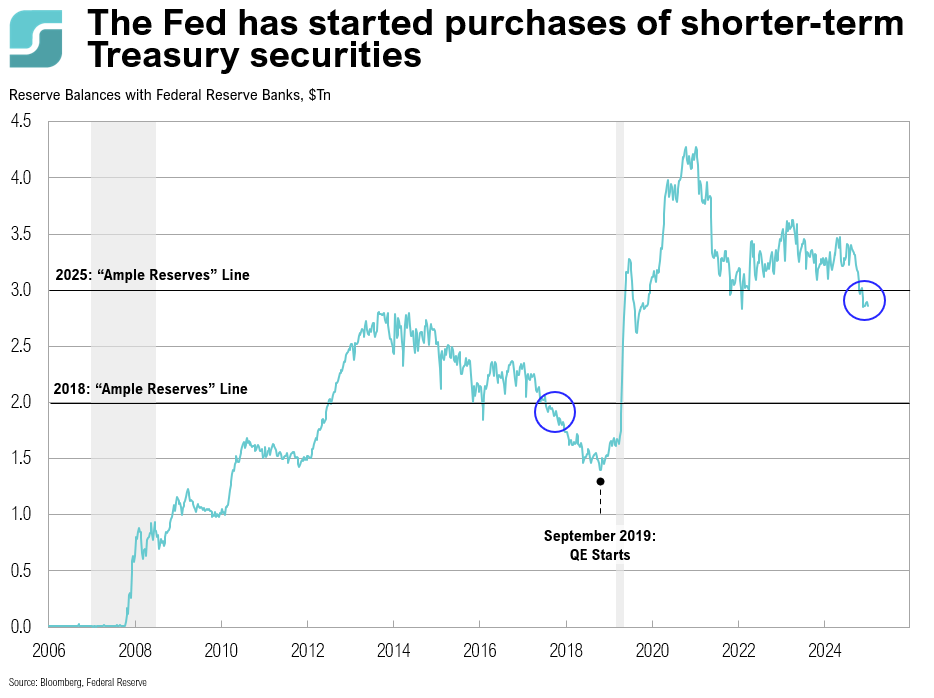
- At the December 10 FOMC meeting, the Federal Reserve cut interest rates by 0.25%, bringing the range to 3.5% – 3.75%. Further, Fed Chair Jerome Powell announced that the Fed would start purchasing shorter-term Treasury securities “for the sole purpose of maintaining an ample supply of reserves over time.” Starting December 12, these purchases are expected to total about $40 billion per month, but the amount may vary from month-to-month.
- According to the Fed, the goal is to ease pressure in overnight funding markets and keep the fed funds rate within its target range.
- In 2019, Fed reserves also dropped below what was then deemed to be the ‘ample reserves line’ ($2 trillion) and the Fed restarted quantitative easing—a dynamic that now appears to be re-emerging, as buying shorter-term Treasuries is indeed a form of monetary easing.
DISCLOSURES
The material shown is for informational purposes only. Any opinions expressed are current only as of the time made and are subject to change without notice. This report may include estimates, projections or other forward-looking statements; however, forward-looking statements are subject to numerous assumptions, risks, and uncertainties, and actual results may differ materially from those anticipated in forward-looking statements. As a practical matter, no entity is able to accurately and consistently predict future market activities. Additionally, please be aware that past performance is not a guide to the future performance of any investment, and that the performance results and historical information provided displayed herein may have been adversely or favorably impacted by events and economic conditions that will not prevail in the future. Therefore, it should not be inferred that these results are indicative of the future performance of any strategy, index, fund, manager or group of managers. The graphs and tables making up this report have been based on unaudited, third-party data and performance information provided to us by one or more commercial databases. While we believe this information to be reliable, SpringTide Partners bears no responsibility whatsoever for any errors or omissions.
Index benchmarks contained in this report are provided so that performance can be compared with the performance of well-known and widely recognized indices. Index results assume the re-investment of all dividends and interest. The information provided is not intended to be, and should not be construed as, investment, legal or tax advice. Nothing contained herein should be construed as a recommendation or advice to purchase or sell any security, investment, or portfolio allocation. This presentation is not meant as a general guide to investing, or as a source of any specific investment recommendations, and makes no implied or express recommendations concerning the manner in which any client’s accounts should or would be handled, as appropriate investment decisions depend upon the client’s specific investment objectives.
SpringTide Partners, LLC is a registered investment adviser with the Securities and Exchange Commission; registration does not imply a certain level of skill or training. For more detail, including information about SpringTide’s business practices and conflicts identified, please refer to SpringTide Partners’ Form ADV Part 2a and Form CRS at: https://www.springtide-partners.com/disclosures
